Topiary and Yew Hedge Shaping: How to Keep Formal Hedges in Shape Year-Round
Expert yew hedge trimming in Nottinghamshire and Newark-on-Trent. Learn when to cut, how hard to go and why proper timing keeps your yew in peak shape.

Yew Hedges Are Unforgiving If You Get the Timing Wrong
Yew is one of the finest hedging plants you can grow. Dense, dark and architectural, a well-maintained yew hedge looks sharp all year round. But cut it at the wrong time or take off too much at once, and you can set it back badly. We see it regularly across Newark-on-Trent and the surrounding Nottinghamshire villages: yew hedges that have been hacked at with no plan, left with brown patches, or allowed to balloon out until they are eating half the garden.
This article covers what you actually need to know about yew hedge trimming. When to do it, how hard you can cut, what to avoid, and why a consistent annual approach beats the occasional emergency chop every time.
When to Trim a Yew Hedge in Nottinghamshire
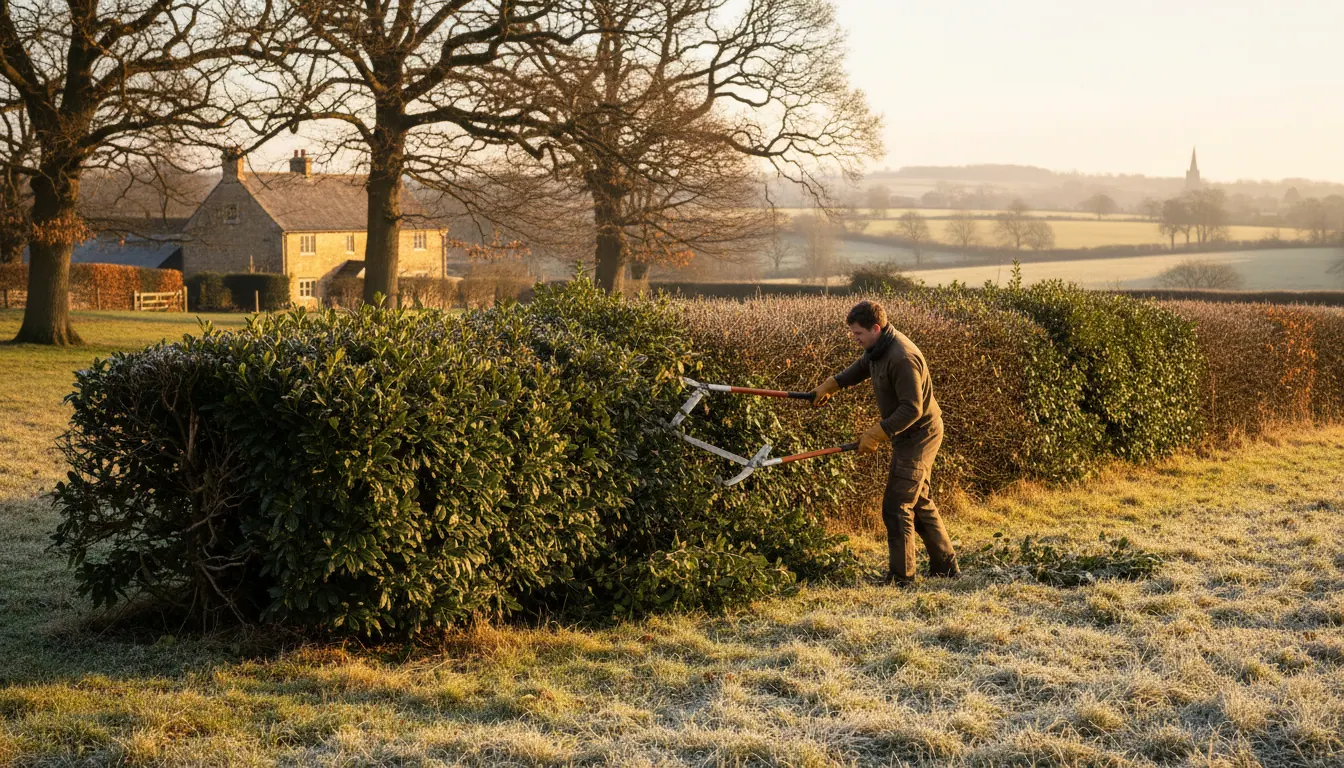
The standard advice is to trim yew once a year, in late summer. August into early September is the sweet spot. By then the new growth that flushed in spring has hardened off, so you are cutting back into firm material rather than soft, sappy shoots. The hedge holds its shape through autumn and winter, and comes into the following spring looking clean and defined.
That said, yew is more tolerant than most hedging plants. Unlike conifers such as leylandii or western red cedar, yew will regenerate from old wood. That means you can be more confident cutting into established growth without permanently damaging the plant, provided you do not strip it of all green foliage in one go.
A few timing rules worth knowing:
- Avoid trimming in hard frost. Freshly cut stems are vulnerable. If a sharp frost follows a trim, you can get dieback on exposed cuts.
- Avoid trimming during nesting season. In the UK, that broadly covers March to August. If birds are actively nesting in the hedge, the job waits. It is a legal requirement, not just a courtesy.
- Do not trim in drought conditions. Yew under heat stress does not recover from cutting as well. If Nottinghamshire has had a dry spell, wait for conditions to ease before you go in.
For most properties we visit around Newark, one good trim per year in late summer is all a well-established yew hedge needs.
How Hard Can You Cut a Yew Hedge?
This is where yew stands apart from other evergreens. It is one of very few conifers that will genuinely regenerate from hard cutting into bare, brown wood. That makes it ideal for renovation work on hedges that have been neglected or allowed to grow far wider and taller than intended.
If you have a yew hedge that has spread significantly, a phased reduction is the right approach:
- Reduce the height and one side in year one.
- Allow the hedge to recover and push new growth.
- Tackle the other side the following year.
Going at all four faces at once puts too much stress on even a healthy yew. Spread the work over two seasons and the hedge bounces back far better.
We carry out yew hedge reductions across Nottinghamshire regularly, including properties in the villages around Newark where older gardens often have substantial, mature yew that has simply been left to its own devices for years. The results once a proper reduction is done are striking. The hedge looks intentional again rather than like a problem waiting to happen.
"Enthusiastic and polite young guys who have taken the initiative to start their own business. They've learned on the job, listened to feedback and always tried to help as well as saving us a whole winter of leaf collection which is nobody's favourite job in a large garden." , Emily Newbury
Emily's review captures something we genuinely believe in: doing the job properly, listening to what the customer actually needs, and taking the work seriously. A yew hedge renovation is not a quick tidy. It takes a trained eye, the right tools and a clear plan. We bring all three.
Yew Hedge Trimming Versus Other Hedging Plants
It is worth understanding what makes yew different, especially if your garden has a mix of hedge types.
Privet needs cutting more frequently, often two or three times a season during the growing months, to stay tight. Our guide to overgrown privet hedges goes into the detail on why width reduction matters more than most people realise.
Laurel and conifer hedges are a different story again. Laurel grows quickly and needs cutting at least once, sometimes twice, a year. Conifers like leylandii must be kept on top of annually because they will not regenerate from brown wood the way yew does. We cover the specifics of those in our article on conifer and laurel hedge trimming: timing, height and why it matters in dry spells.
Yew sits in a different category. It is slower growing, more tolerant of hard cutting, and with the right annual care it will outlast almost any other hedge in your garden.
What a Professional Yew Trim Actually Involves
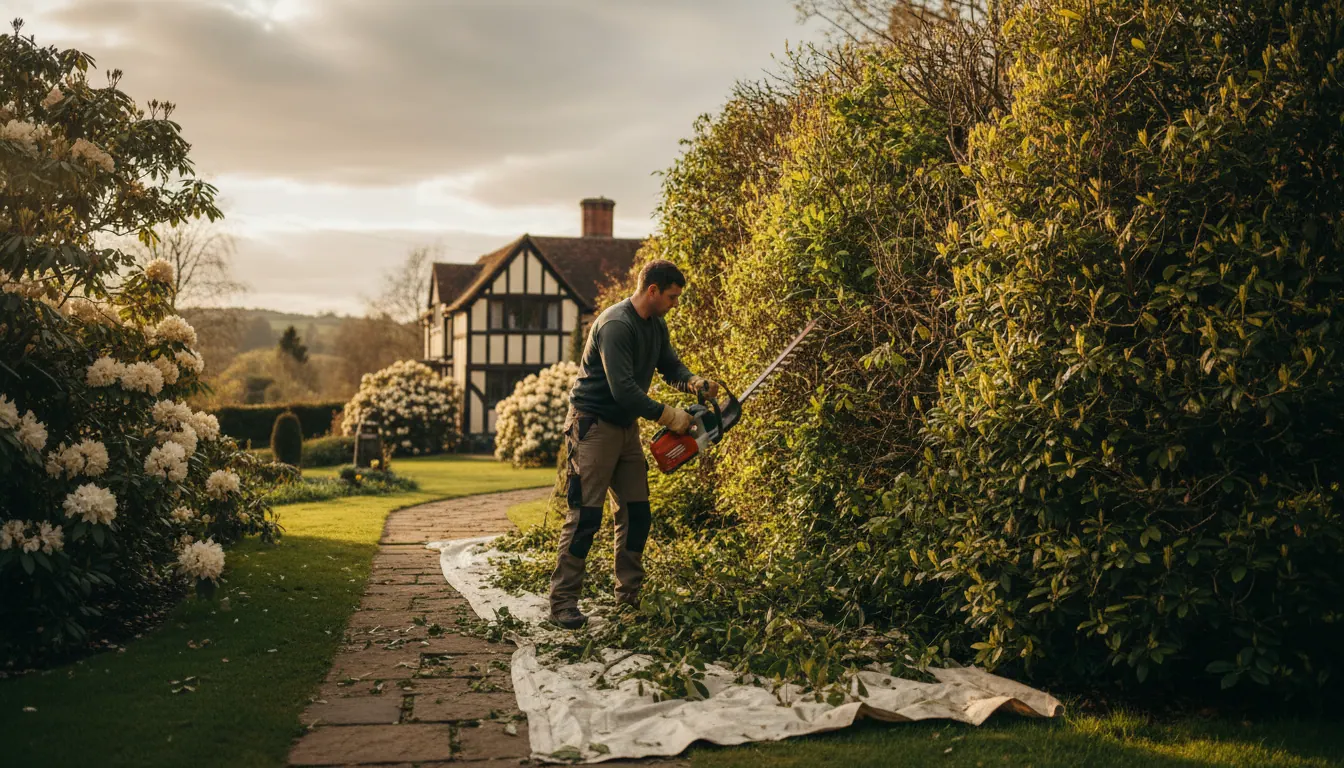
When we arrive to trim a yew hedge, the job is not just running a hedge trimmer along the top. Here is what a proper trim looks like:
- Assessment first. We look at the overall shape, identify any areas of dieback or pest damage, and agree the finished height and width with you before we start.
- Top cut. We work to a level line, using the existing shape as a guide, taking off the current season's growth and keeping the top flat or slightly tapered (a slight A-shape helps light reach the lower branches).
- Side cuts. Both faces trimmed back to the agreed width, keeping the line consistent from top to bottom.
- Waste removal. All clippings are cleared and taken away. We leave the site tidy. That is part of the job, not an optional extra.
For larger or more formal yew, particularly topiary shapes, the approach is more detailed. Topiary yew needs a steady hand and a clear understanding of the underlying form. We work with that, not against it.
Keeping Your Yew Hedge in Peak Condition Year Round
A single annual trim is the foundation, but a few other habits make a real difference:
- Clear debris from the base. Leaf litter and dead material sitting around the base of the hedge can harbour fungal problems. A clean base helps.
- Check for pest damage. Yew scale and vine weevil can both affect yew. Catching them early limits the damage.
- Do not let it get away from you. The longer a yew hedge is left untrimmed, the more work it takes to bring it back. One good cut a year keeps everything manageable.
Consistency is the key. It is the same principle we apply to every garden we look after across Newark and Nottinghamshire: regular, disciplined attention keeps things in peak condition far more effectively than infrequent heavy intervention.
Frequently Asked Questions About Hedge Trimming in Nottinghamshire
When should you not trim hedges in the UK?
The two main periods to avoid are nesting season (broadly March to August, when birds may be actively nesting) and during hard frosts. Cutting during nesting season can disturb or destroy active nests, which is an offence under the Wildlife and Countryside Act 1981. Cutting in frosty conditions can cause dieback on freshly exposed stems. For yew specifically, late summer (August to early September) is the ideal window for the annual trim.
Is there a wrong time to trim a yew hedge specifically?
Yes. Avoid cutting yew when it is under heat or drought stress, as it recovers less well. Also avoid cutting in late autumn or winter if sharp frosts are forecast soon after. Spring cuts are possible but not ideal, as you risk removing the new growth flush before it has a chance to contribute to the hedge's density.
My yew hedge has grown too tall. Can it be cut back hard?
Yew is one of the few hedging plants that will regenerate from old wood, so yes, it can be cut back significantly. The sensible approach is to phase a major reduction over two seasons rather than tackling all four faces at once. This reduces stress on the plant and gives it time to push new growth from the cut surfaces before the next reduction. We carry out yew hedge height and width reductions across Nottinghamshire regularly.
How often does a yew hedge need trimming?
For a well-established yew hedge, once a year is usually sufficient. Yew is a slow grower compared to privet or laurel, so a single trim in late summer keeps it tidy through autumn and winter and into the following spring. Younger hedges that you are training into shape may benefit from a light clip in early summer as well, to encourage density.
Get Your Yew Hedge Trimmed Properly This Season
If you have a yew hedge in Newark-on-Trent, across Nottinghamshire or in one of the surrounding villages that needs a proper tidy, a phased reduction or a full renovation, we can help. We are fully insured, we take all waste away, and we do not leave until the job is done right.
No fuss. No mess. Just a hedge that looks the way it should.
Call us on 07704 442169 to tell us what you have got and we will take it from there.