Overgrown Privet Hedge? Here's Why Width Reduction Matters More Than Height
Need privet hedge reduction in Newark-on-Trent? We reduce width and height, clear all waste and leave no mess. Fully insured. Call FitBoys Gardening.

Privet Hedges Don't Slim Down on Their Own
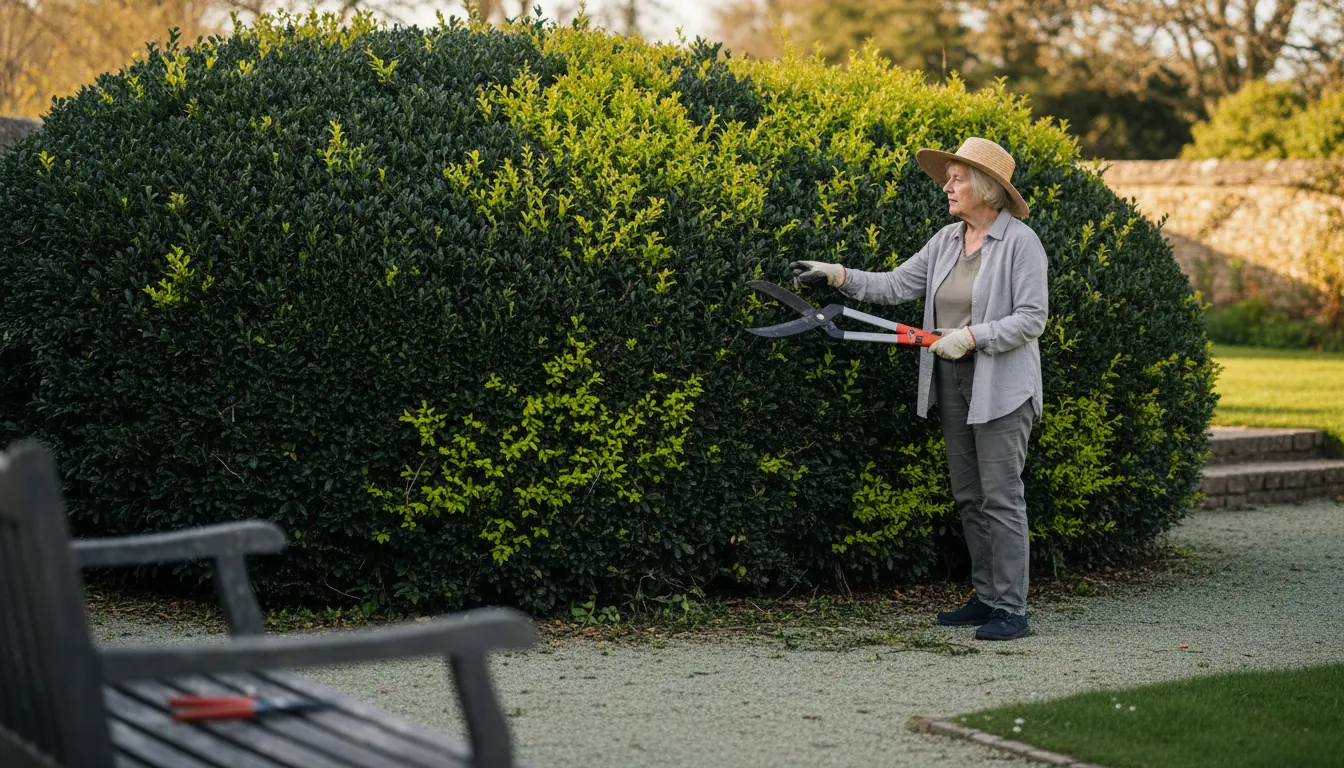
A privet hedge that's been left to its own devices for a few seasons can turn from a neat boundary into a wall of green that eats into your path, your lawn, your neighbour's light, and your patience. We see it constantly across Newark-on-Trent and the surrounding villages. A hedge that started at two feet wide is now four. It's blocking the gate, scraping the car, and the clipping pile alone fills three bin bags.
That's where privet hedge reduction comes in. Not a light trim. A proper, disciplined cut-back that takes real width and height off the plant and restores the shape you actually want. It's one of the most satisfying jobs we do, and when it's done right, the hedge bounces back stronger.
Here's what you need to know.
What Privet Hedge Reduction Actually Involves
Reduction is not the same as a trim. A trim tidies the surface. A reduction takes the hedge back to a new, smaller framework, cutting into older, thicker wood on the sides and top.
For width reduction specifically, we work both faces of the hedge, cutting back to a point well inside the current outer growth. This exposes older stems, which can look stark for a few weeks, but privet is one of the most forgiving hedging plants in the UK. It regenerates from old wood reliably, filling back in with fresh, dense growth.
The process involves:
- Assessing the internal structure before cutting (dead wood, crossing stems, any disease)
- Cutting the sides back evenly to the target width, using lines and levels to keep it straight
- Reducing the top to the target height if required
- Clearing every scrap of clipping from your garden, path, lawn and borders
- Taking all waste away with us
We don't leave bags at the kerb. The garden is tidy before we leave.
What Our Customers Say
Sue Hartley had exactly the kind of job we're talking about. Here's what she said:
"The guys cut back some very overgrown shrubs and reduced the width of a ridiculously thick privet hedge for me. They were professional, polite and efficient, did a great job and left no mess behind. I'd definitely use them again."
That phrase, "ridiculously thick", tells you everything. This wasn't a hedge that needed a tidy. It needed real work. Cutting into established privet like that takes the right tools, the right technique, and the confidence to make a bold cut knowing the plant will recover. That's the gym mentality applied to gardening: commit to the work, do it properly, and trust the result.
When to Reduce a Privet Hedge in Nottinghamshire
Timing matters. Privet is semi-evergreen in the UK, meaning it holds most of its leaves through mild winters but can drop them in a cold snap. That gives you a useful window for hard reduction work.
The best times for privet hedge reduction are:
- Late winter (February to early March): The hedge is at its least active. Cutting back hard now means the plant puts all its spring energy into new growth, filling the gaps quickly. This is our preferred window for major reductions.
- Early summer (late May to June): After the first flush of growth has hardened off. A reduction now gives a second recovery period before winter.
Avoid cutting privet hard in:
- Late autumn and early winter (November to January): Fresh cuts on old wood are more vulnerable to frost damage. A light trim is fine, but save the heavy reduction for later.
- During nesting season (March to August): Before any hedge work, we always check for active bird nests. This isn't just good practice, it's a legal requirement. The Wildlife and Countryside Act 1981 protects nesting birds, and we take that seriously.
For Newark-on-Trent and the surrounding Nottinghamshire villages, late February is usually the sweet spot. The worst of the frost is typically behind us, the ground is workable, and the hedge responds fast once the growing season kicks in.
How to Reduce the Width of a Privet Hedge: The Practical Detail
People often ask us exactly how this is done, because it can look alarming when you first see the cut. Here's the honest answer.
You pick a target width. Say the hedge is currently five feet wide and you want it at two and a half. You cut one face back to roughly half that target, and the other face to the other half, working from a string line or a cane marker so both sides are symmetrical. The top is cut last, levelled with a spirit level or laser line if precision matters.
The exposed wood looks rough for a few weeks. Brown stems, no leaves on the cut surface. But privet pushes new shoots from old wood very readily. Within six to eight weeks in the growing season, you'll see green coming back. By the end of the summer, with one or two follow-up trims, the hedge looks full again, just at the width you actually want.
The key mistakes to avoid:
- Cutting both sides in the same season if the hedge is very old and the wood is thick. Some older hedges benefit from one side being reduced one year, the other the following year, to reduce stress on the plant.
- Not cutting the top at the same time. A hedge reduced in width but left tall looks odd and the proportions work against you.
- Leaving the clippings in the hedge base. Rotting privet clippings encourage fungal issues. Clear them out.
We always assess the hedge before we start and tell you what we think is achievable in one visit.
Will Privet Grow Back After Being Cut Hard?
Yes. Privet is one of the most resilient hedging plants you can grow in the UK, and that's one of the reasons it became so popular for garden boundaries across Nottinghamshire and beyond. It tolerates hard pruning better than most conifers, better than laurel in many cases, and far better than yew when it comes to speed of recovery.
The caveat is this: a very old, very neglected hedge that has never been reduced may take two growing seasons to fully recover its density. That's normal. The structure will be sound and the growth will come. It just needs patience and a follow-up trim once the new growth has hardened.
We've never had a privet hedge fail to recover from a hard reduction when the cut was made at the right time of year. The plant wants to grow. Give it the right conditions and it will.
Regular Maintenance After a Reduction
Once the hedge is back to the size you want, keeping it there is much easier than the original reduction. Privet benefits from two trims a year: once in late spring after the first flush, and once in late summer before the growing season slows. That's it.
If you'd rather not think about it, we offer regular garden maintenance slots across Newark-on-Trent and the surrounding villages, weekly, fortnightly or monthly, depending on what suits you. We keep the hedge in check, along with everything else.
Frequently Asked Questions
How do I reduce the width of a privet hedge without killing it?
Cut one face at a time if the hedge is very mature, or both faces in one session if the hedge is reasonably healthy and the reduction is not extreme. Work to a string line so the cut is even. Cut in late winter or early summer. Clear all clippings from the base. The hedge will push new growth from the old wood within weeks of the growing season starting.
Will a privet hedge grow back if cut back hard?
Yes, reliably. Privet regenerates from old wood very well. A hard reduction in late February will produce visible new growth by April or May. Full density is usually restored within one growing season for a healthy hedge, or two seasons for a very old or neglected one.
What month should I trim my privet hedge?
For a light maintenance trim, late May and late August are the standard times in Nottinghamshire. For a hard reduction, late February to early March is best, before the growing season starts but after the worst frost risk has passed.
What month should you not cut hedges?
Avoid cutting any hedge hard between November and January when frost risk is highest and the plant is least able to heal fresh cuts. Also avoid cutting during active nesting season (March to August) without first checking for birds. A light trim in late summer is fine, but save any major work for late winter.
Get Your Privet Hedge Sorted
If you've got a privet hedge in Newark-on-Trent or the surrounding villages that's grown well beyond the size you want, we can sort it. We'll assess the hedge, agree a target size with you, do the work properly, and take every last clipping away. Fully insured, 100% customer satisfaction, no mess left behind.
Get in touch with us to book your privet hedge reduction or call us on 07704 442169. We cover Newark-on-Trent and the surrounding Nottinghamshire villages, and we're ready to get to work.