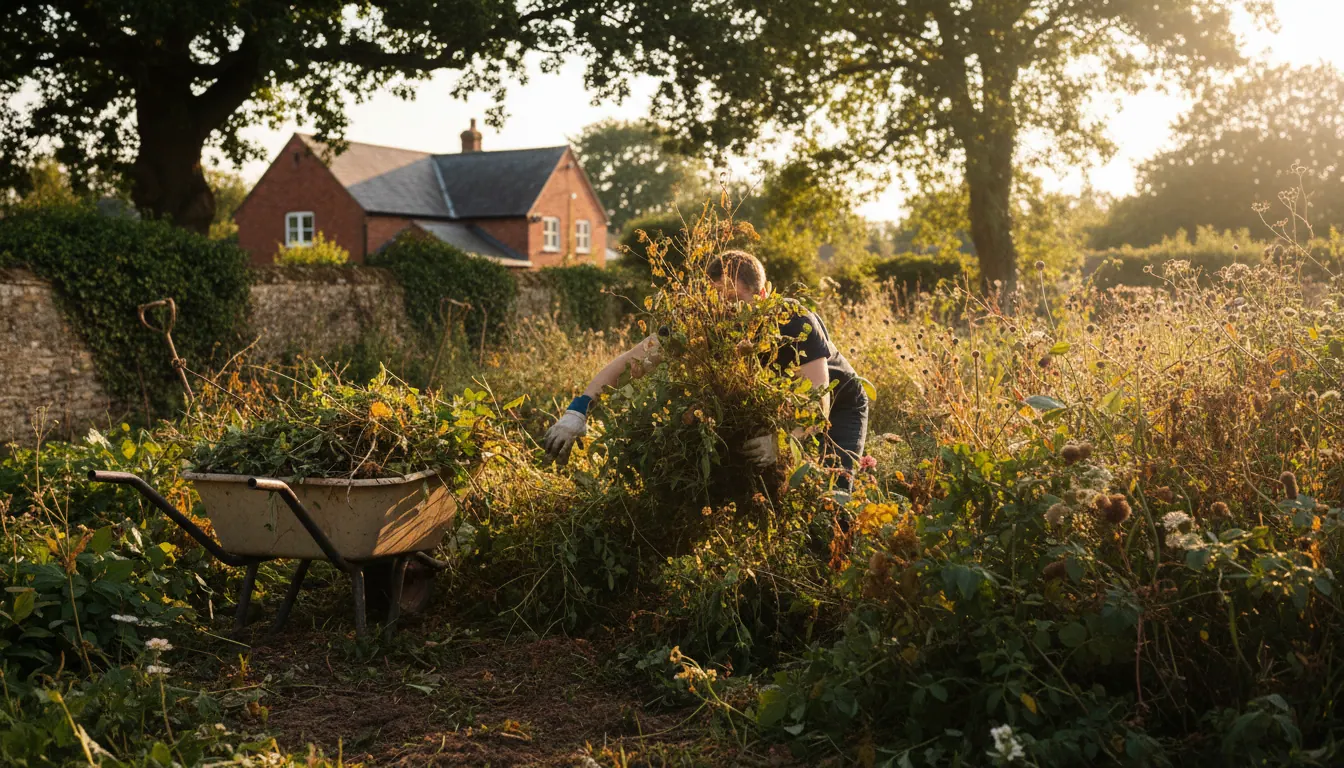
Privet Hedge Reduction in Winter: Why Now Is the Time to Cut Back Thick Hedges in Nottinghamshire
Privet hedge winter cutting in Nottinghamshire explained. When to cut, how wide to go, why width matters and how we keep hedges in shape across Newark and beyond.

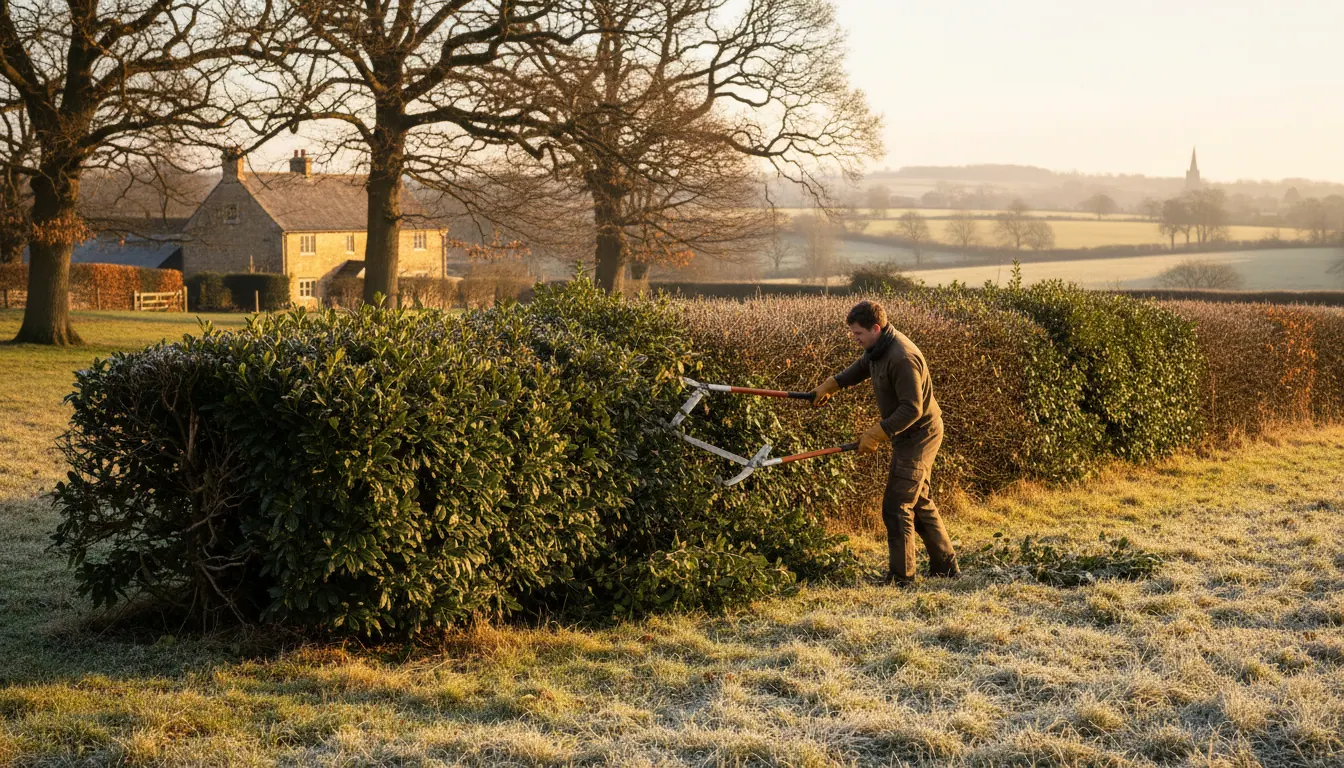
Privet in Winter: A Job Worth Doing Right
Privet is tough. It grows fast, it bulks up quickly, and left to its own devices it will double in width before you have even noticed. That is partly why it is such a popular hedging plant across Newark-on-Trent and the surrounding Nottinghamshire villages. But that same vigour is exactly what makes winter cutting so important.
Get the timing and technique right and you will go into spring with a hedge that is compact, healthy and easy to manage. Get it wrong and you either risk regrowth that is impossible to keep tidy, or you shock a plant that needed gentler handling. Here is what we actually do, and why.
Does Privet Really Need Cutting in Winter?
Short answer: yes, often it does. Privet is semi-evergreen in most of the UK, which means it holds a lot of its leaves through autumn and into winter depending on how cold it gets. In a mild Nottinghamshire winter it can look almost fully leafed up well into January.
Because privet grows so vigorously through spring and summer, it can put on a huge amount of bulk in a single season. By the time autumn arrives, many hedges are significantly wider and taller than they were in spring. A light trim in summer keeps the surface tidy, but it does not address the underlying structure.
Winter is the right time to do the harder work:
- Width reduction. This is the job most people put off. If a privet hedge has spread well beyond its footprint, cutting it back hard in late winter (February is ideal for most Nottinghamshire gardens) gives it the whole growing season to recover and fill back in neatly.
- Height reduction. If the hedge has grown above a manageable height, late winter is a safe window to bring it down before nesting season begins in spring.
- Hard renovation. Privet is one of the few hedging plants that will tolerate being cut back very hard. If a hedge has been neglected for years, a proper renovation cut in late winter can bring it back to life.
We cover this in more detail in our article on overgrown privet hedges and why width reduction matters more than height, but the short version is this: a thick hedge is harder to manage than a tall one, and most homeowners focus on height when width is the real problem.
When Exactly Should You Cut Privet in Winter?
Timing matters. Here is how we think about it across our work in Newark-on-Trent and the villages around it.
November to January. You can tidy a privet hedge during this period, but avoid cutting back hard into old wood when temperatures are consistently below freezing. Hard frosts after a heavy cut can stress the plant, particularly on younger hedges. A light surface trim to keep things presentable is fine.
February. This is the sweet spot for harder work. The worst of the winter cold is usually behind us by mid-to-late February in Nottinghamshire, and the hedge has not yet started pushing new growth. It is the ideal window to tackle width reduction, height reduction or full renovation cuts. You get the benefit of dormancy without the frost risk.
March. Still workable for a harder cut, but growth is starting. If you are planning a significant reduction, earlier is better. By late March, privet is actively growing and you lose the clean, dormant-season advantage.
One thing we always check before cutting: nesting birds. The legal nesting season in the UK runs from approximately March to August, so a late winter cut keeps you well clear of that. If you are unsure, we can advise when we come out to look at the job.
Width Reduction: Why It Is the Most Important Cut
This is the job that makes the biggest difference and the one that most people are understandably nervous about. Cutting the sides of a privet hedge back hard looks dramatic. You are removing significant bulk, often exposing older, woodier stems underneath.
But privet handles it well. It is one of the most regenerative hedging plants there is. Cut it back to a manageable width in late winter and by midsummer it will be putting on fresh, dense new growth that fills back in far more neatly than the sprawling bulk you removed.
Why does width matter so much? A hedge that has spread too wide:
- Encroaches on paths, driveways and borders
- Shades out plants growing nearby
- Becomes increasingly difficult to cut the centre of cleanly
- Looks unruly even after a surface trim, because the underlying shape is wrong
We recently had exactly this situation with a customer in the Newark area. Sue Hartley left us this review after we tackled her hedge:
"The guys cut back some very overgrown shrubs and reduced the width of a ridiculously thick privet hedge for me. They were professional, polite and efficient, did a great job and left no mess behind. I'd definitely use them again."
That phrase, "ridiculously thick", is something we hear a lot. Privet gets away from people. The good news is that it responds brilliantly to a proper reduction cut when it is done at the right time of year.
All waste from jobs like this is taken away by us as part of the work. No skips, no green bin overflow, no garden full of cuttings.
How Much Can You Take Off?
Privet will tolerate being cut back hard, but there are sensible limits.
For width, we typically aim to cut back to a point where the hedge is slightly narrower than you ultimately want it, because it will fill back in. If a hedge is a metre wide and needs to be 40 cm, that is achievable in a single late-winter cut for a healthy, established plant.
For height, the same principle applies. Privet can be brought down significantly in one go. If a hedge has reached 3 metres and needs to be 1.5 metres, that is a realistic renovation cut in late winter.
What we do not do is cut all four sides at once in a single extreme session on a hedge that is already stressed or in poor condition. If a hedge is struggling, we assess it first and sometimes recommend a phased approach over two seasons. That is the honest answer, not the one that sounds most impressive.
What About Autumn Cutting?
Autumn trimming (September to October) is useful for tidying up summer growth and giving the hedge a clean shape going into winter. We cover the general case for autumn hedge work in our article on hedge cutting in autumn and why September and October are peak season in Nottinghamshire.
For privet specifically, an autumn trim is fine for surface tidying, but it is not the moment for hard width or height reductions. Leave the structural work for late winter when the plant is properly dormant and the frost risk is past.
What We Do When We Cut a Privet Hedge
For anyone wondering what the actual process looks like, here is a straightforward breakdown of how we approach a privet hedge job in Newark-on-Trent and the surrounding villages.
- Assess the hedge first. We look at the current width, height, overall health and what the customer actually wants. Some people want a light tidy; others want a full renovation. We work to what is right for that specific hedge.
- Cut to shape, not just to surface. Surface trimming with a hedgetrimmer is fast but it does not address structure. Where a reduction is needed, we cut back to the right point, not just skim the outside.
- Clean up properly. All cuttings are collected and removed. We do not leave clippings on borders, lawns or drives.
- Leave it looking right. Straight lines, clean angles, consistent height. A hedge that looks like it has had proper attention, not a rushed tidy.
We are fully insured and aim for 100% customer satisfaction on every job.
Frequently Asked Questions
Can you cut a privet hedge in winter in Nottinghamshire? Yes. Light trimming is fine throughout winter. For harder work, such as width or height reductions, late February is the best window in Nottinghamshire. The worst frost is usually behind us by then, the hedge is still dormant, and you are well clear of nesting season.
How far back can you cut a privet hedge? Privet is one of the most resilient hedging plants and will tolerate being cut back hard into old wood. For a healthy, established hedge, a significant width or height reduction in late winter is entirely achievable. We assess each hedge individually before recommending how much to take off.
Why is my privet hedge so thick and how do I fix it? Privet grows fast and puts on a lot of bulk through the growing season. Regular summer trims keep the surface tidy but do not reduce the underlying width. The fix is a proper width reduction cut in late winter, which brings the hedge back to a manageable footprint and allows it to fill back in neatly through spring and summer.
Do you take away the cuttings after a hedge cut? Yes, always. All garden waste is removed as part of the job. You will not be left with a pile of privet cuttings to deal with yourself.
Get Your Privet Hedge Sorted Before Spring
If your privet hedge has bulked up and needs proper attention before the growing season starts, now is the time to plan it in. We work across Newark-on-Trent, Nottinghamshire and the surrounding villages, and late winter is one of our busiest periods for exactly this kind of structural hedge work.
Every job is quoted individually once we have understood what is needed. Call us on 07704 442169 and we will come out, take a look and give you a straight answer about what the hedge needs and when.