Conifer and Laurel Hedge Trimming: Timing, Height and Why It Matters in Dry Spells
Expert laurel hedge trimming in Newark-on-Trent and surrounding villages. We cover height, width and timing so your hedge stays healthy all year round.


Laurel hedges are hard workers, but they need handling properly
A well-grown laurel hedge is one of the best screens you can have around a Newark garden. Dense, evergreen, fast-growing. Left to its own devices, though, it will double in size before you've noticed, block the light, swallow the fence line, and turn into a job that feels genuinely intimidating. We see it constantly across Newark-on-Trent and the surrounding villages. What started as a tidy two-metre boundary hedge is now three metres wide and pushing four metres tall.
The good news: laurel responds well to hard cutting. You just need to know what you're doing, when to do it, and how far back you can safely go.
What makes laurel different from other hedges
Laurel (most commonly cherry laurel, Prunus laurocerasus) has large, glossy leaves and vigorous growth. That vigour is both its strength and the reason it gets out of hand so quickly. In a wet Nottinghamshire spring, a neglected laurel can put on 60 cm of new growth or more.
A few things that set it apart from privet or beech:
- Large leaves bruise easily. Run a powered hedge trimmer straight across the foliage and you'll get brown, scorched-looking cuts on every leaf the blade bisects. It looks rough for weeks.
- It tolerates hard renovation. Unlike some conifers (leyland cypress being the classic cautionary tale), laurel will regenerate from old wood. You can take it back hard and it will come back.
- Width matters as much as height. A laurel hedge that has been topped for years but never had its sides reduced becomes a dense, heavy wall that shades out everything behind it and puts stress on the root system.
If you've got a privet that's also running away, our article on overgrown privet hedges and why width reduction matters more than height covers the same principle in detail. The logic applies directly to laurel too.
The right tool for the job
This is where a lot of DIY laurel trimming goes wrong. A standard electric hedge trimmer with narrow blades will chew through those big leaves and leave a brown, ragged finish. For laurel, you want one of two approaches:
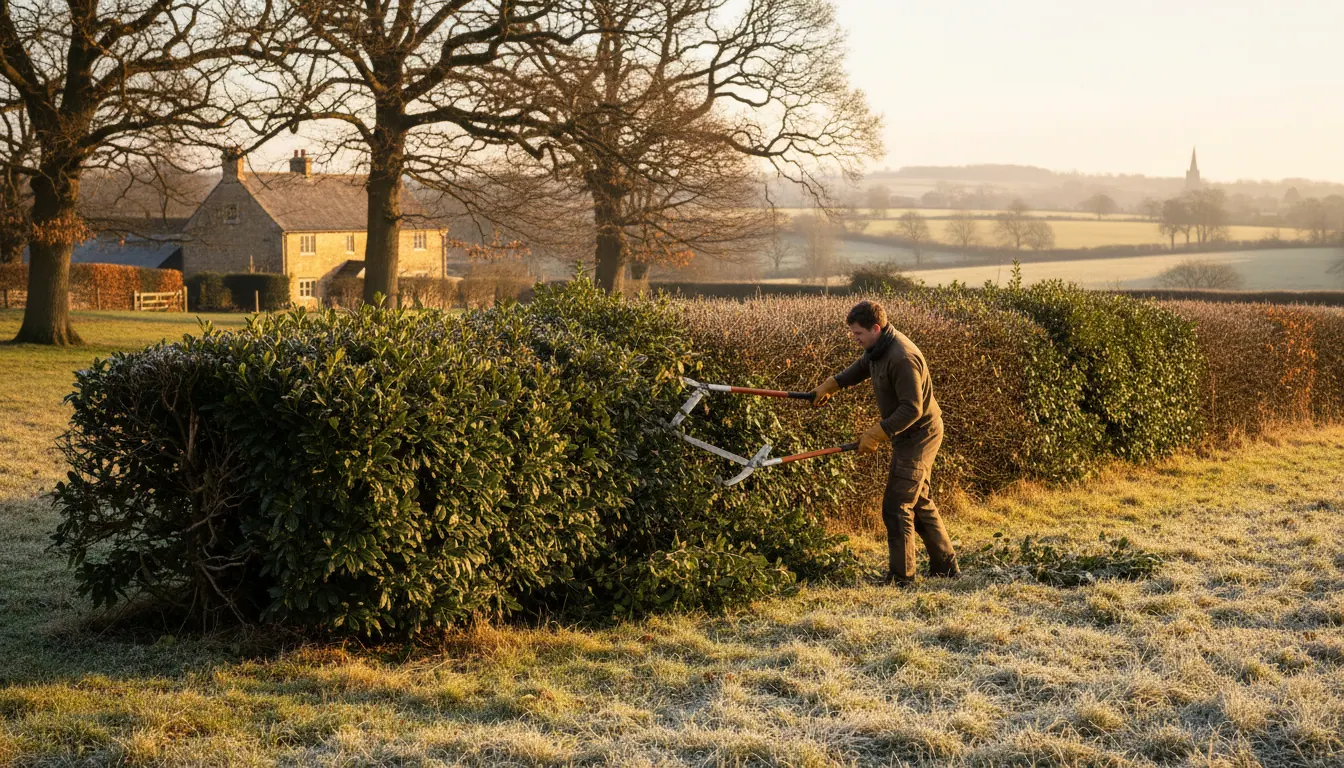
- Secateurs or loppers for a clean finish. Slow work, but every cut is made at a stem junction rather than through the middle of a leaf. The result looks natural and heals fast. This is the right method for a formal or display hedge.
- A powerful petrol trimmer with wide blade spacing. Cuts faster, still acceptable for a boundary hedge that just needs keeping in check. The key is to follow up by removing the worst of the bisected leaves by hand, or to time the cut so new growth covers them quickly.
We use petrol kit for volume work across Newark-on-Trent and the villages, and we tidy the finish properly. No half-measures.
When to trim a laurel hedge in Newark
Timing is genuinely important, and it's one of the questions we get asked most often.
The best windows for laurel trimming are late spring (May to early June) and late summer (August to early September). Cutting in late spring tidies winter growth and gives the plant the whole growing season to push out fresh cover. A late-summer cut shapes it up before it slows down for autumn, and new growth will harden off before the first frosts arrive.
What about the legal and wildlife side? The Wildlife and Countryside Act 1981 protects nesting birds. In practice, most birds are nesting between March and the end of July, with the peak from April to June. We avoid cutting any hedge during that window unless we have checked thoroughly for active nests first. No nest, no eggs, no chicks, no problem. But we take it seriously, and you should too.
Avoid cutting laurel in a hard frost. The cuts won't callus properly, and the exposed tissue is vulnerable to cold damage. November onwards in Nottinghamshire can bring sharp frosts, so if you're planning an autumn tidy, get it done in September or early October at the latest.
How to tackle an overgrown laurel hedge
An overgrown laurel, say one that hasn't been touched in five or more years, needs a staged approach rather than a single savage cut.
Year one: Reduce the height and cut one side hard. Take the other side back to a reasonable line but leave it with more material than you ideally want. This keeps enough leaf area for the plant to photosynthesise and recover.
Year two: Cut the second side back hard. By now the first side will have pushed new growth and the hedge is recovering its shape.
Ongoing: Once you're at the size you want, regular cuts twice a year keep it there without stress to the plant.
For a hedge that has been left for a decade or more, the base is often bare and woody. Cutting back hard will encourage new shoots from the base, but it takes a season or two for them to fill in. Patience is part of the job.
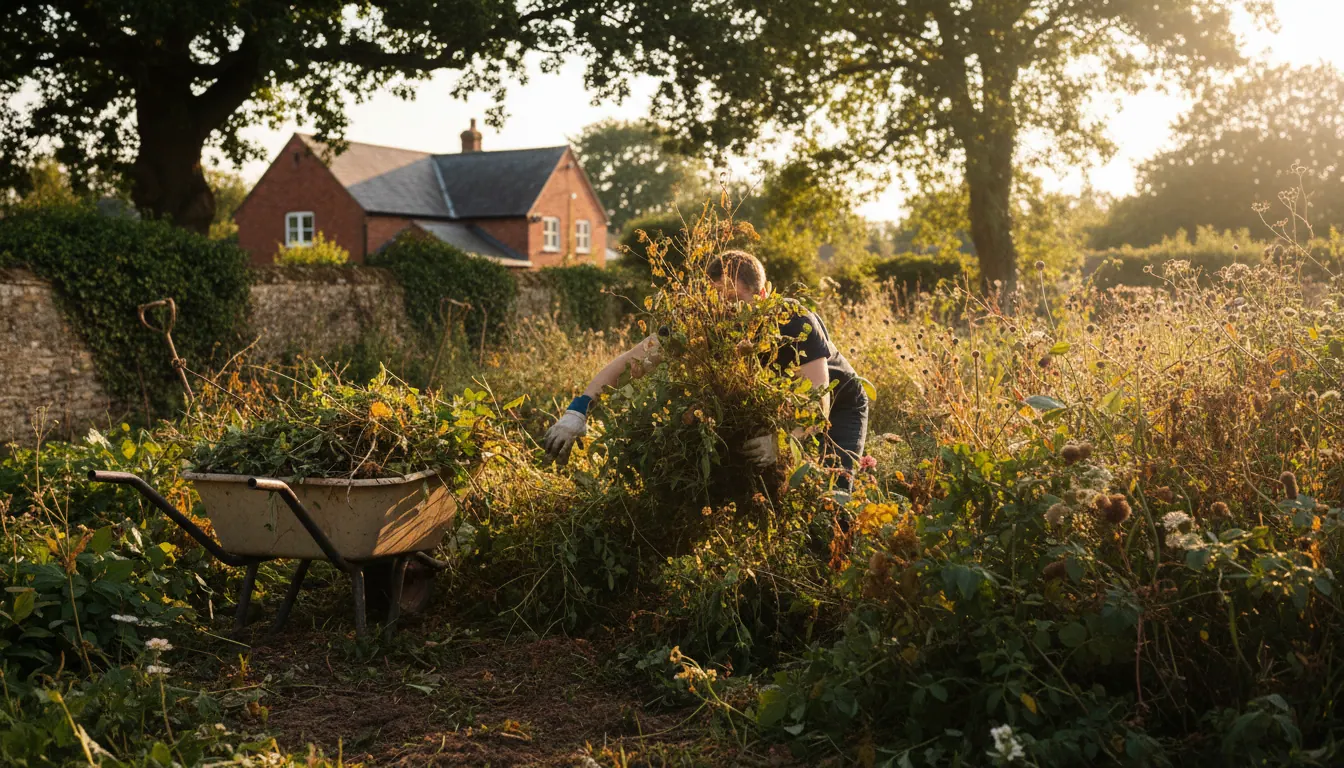
The waste from a serious laurel reduction is substantial. Laurel leaves are bulky and slow to break down. We take all green waste away as part of every job. No skips left on your drive, no piles left for you to deal with.
What happens if you cut a hedge back too far?
With laurel, the risk is lower than with many other plants. It will regenerate from old wood. But cut back too far in one go and you stress the plant, reduce its ability to recover, and risk bare patches that take several seasons to fill. The stem tips die back, the root system is under strain, and in a dry Nottinghamshire summer that follows a hard cut, you can lose sections entirely.
The rule we follow: never remove more than a third of the total volume in a single cut. If the hedge is very overgrown, stage it over two seasons as described above.
What our customers say
We've been working across Newark-on-Trent and the surrounding area for a while now, and the feedback we get most often is about reliability and the quality of the finish.
"Charlie has done several jobs for us in the last year. Large lawns cut, big hedges trimmed and our long driveway cleared. He is friendly, punctual and always does an excellent job. Thanks Charlie!"
Sara Bainbridge
That's what we aim for every time. Punctual, thorough, and a finish that speaks for itself. Big hedges are physical work. We don't cut corners on the prep, the cut, or the clear-up.
Regular maintenance versus a one-off cut
A lot of homeowners in Newark book us for a one-off laurel reduction, then decide they want us back on a regular basis. Once the hedge is at the right size, keeping it there is far less effort (and cost) than letting it go and tackling it again in three years.
We offer weekly, fortnightly and monthly maintenance slots across Newark-on-Trent and the surrounding villages. A regular maintenance visit covers hedge trimming as part of a broader garden keep, alongside lawn mowing, weeding, border care and anything else that needs attention that month.
If your lawn has also taken a battering recently, it's worth reading our piece on lawn care after a dry summer alongside any hedge work. Both jobs are best tackled before the growing season closes down.
Frequently asked questions
How do you prune an overgrown laurel hedge? Stage it over two years rather than cutting everything back in one go. In year one, reduce the height and cut one side hard. In year two, cut the second side back. This keeps enough leaf area for the plant to recover and push new growth. For very large or very neglected hedges, get a professional in for the initial reduction. The volume of waste alone makes it a serious undertaking.
What months should you avoid trimming hedges? The main concern is nesting birds. Avoid cutting between March and the end of July unless you have checked carefully for active nests. For laurel specifically, also avoid cutting during hard frosts (typically November through to March in Nottinghamshire) as the cuts won't heal cleanly in freezing temperatures. The sweet spots are May to early June and August to early September.
What happens if you cut a laurel hedge back too far? Laurel is more forgiving than most. It will regenerate from old wood. But remove too much at once and you stress the plant, leaving it vulnerable in a dry spell and risking bare patches that take seasons to fill. The general rule is never remove more than a third of the total volume in a single cut. If more needs to come off, stage it.
Can you get a laurel hedge trimmed in Newark and have the waste taken away? Yes. We take all green waste away as part of every job across Newark-on-Trent and the surrounding villages. Laurel clippings are bulky and slow to compost, so leaving them on site isn't practical. Everything goes. You don't need to arrange a skip or make a tip run.
Get your laurel hedge sorted
If you've got a laurel hedge that needs bringing back under control, or you want it kept sharp on a regular schedule, we're based in Newark-on-Trent and cover the surrounding villages. Fully insured, 5-star rated, and we take the waste away.
Call us on 07704 442169 and we'll take a look. No obligation, no fuss.
“Great service and a fantastically tidy garden 👍🏼”